

QUICK ANSWER
Factory in car navigation systems rely on built in GPS antennas and preloaded map data to provide guidance without needing a cellular signal. While these systems offer seamless integration with the dashboard and work reliably in remote areas they often suffer from outdated maps and expensive update processes. Smartphone apps like Google Maps and Waze generally provide superior accuracy and real time traffic data though they require a data connection. For many drivers using Apple CarPlay or Android Auto offers the best balance by projecting up to date phone navigation onto the car screen.
Modern vehicles now come equipped with advanced technology that makes paper maps obsolete. Drivers rely on these built in systems to find destinations and avoid traffic without much thought. While this tech offers significant convenience the accuracy and overall functionality can vary wildly which directly impacts the daily driving experience.
CheapInsurance.com provides a look into the world of factory installed navigation units. This guide breaks down how the technology works compares it to the smartphone apps most people carry in their pockets and highlights the safety and insurance factors every driver should know.
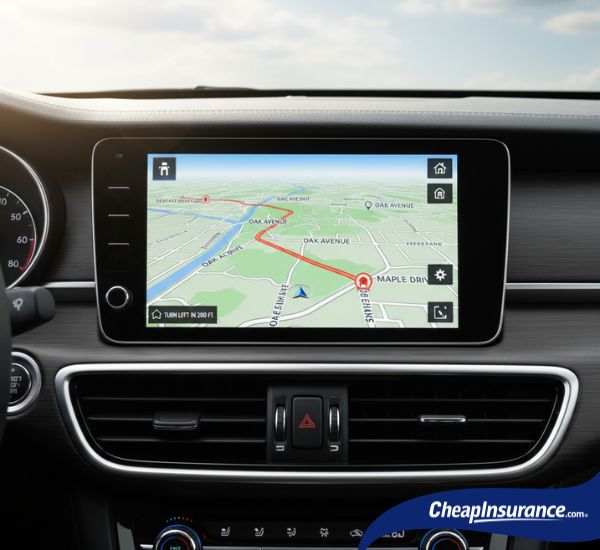
Core Functionality of In Car Navigation
Navigation systems built into the dashboard rely on a specific set of technologies to guide drivers. Understanding how these pieces fit together explains why they work well in some situations and fail in others.
- GPS Reception uses a network of satellites to pinpoint exactly where the vehicle is located. The car antenna receives these signals to calculate coordinates.
- Digital Maps act as the brain of the system. These preloaded databases contain the road networks street names and points of interest. If this database is old the routing will be flawed.
- Route Calculation involves algorithms that analyze map data to find the best path. It considers distance and sometimes historical traffic patterns to suggest the most efficient way to travel.
- User Interface is the screen and voice guidance system. It allows drivers to input addresses and receive visual or audio directions without taking their eyes off the road.
Updating In Car Navigation Systems
Keeping maps fresh is one of the biggest challenges for factory systems compared to phones. Manufacturers use different methods to push these updates.
- Over the Air Updates allow newer vehicles to download map changes wirelessly using a cellular connection. This is the easiest method and keeps data current without much effort from the driver.
- USB or SD Card Updates require the driver to manually download files from a website and transfer them to the car. This process can be slow and often feels outdated.
- Dealership Updates force the owner to visit a service center. This is often the most expensive option as it can involve labor charges just to update software.
Costs and Subscription Models
A navigation system might look like a one time purchase when buying the car but hidden costs often exist. Many brands charge monthly or yearly fees for premium features like live traffic or weather data. If the car uses a dedicated cellular connection data plans can add another monthly bill to the total cost of ownership.
Advantages of Factory Installed Systems
- Seamless Integration means the system looks and feels like part of the car rather than an add on.
- Ergonomics are generally better since controls are often built into the steering wheel or dashboard to keep the driver focused.
- Reliability is a strong point since these units do not rely on a cellular signal for basic routing which helps in remote areas.
- Resale Value tends to be higher for vehicles equipped with factory tech packages.
Disadvantages of Factory Installed Systems
- High Initial Cost makes these systems an expensive option that is often bundled with other features a driver might not want.
- Slow Updates can lead to frustration when the map does not show a new road or exit that has existed for months.
- Limited Functionality often means the point of interest search is clunky compared to Google or Apple maps.
- Vendor Lock In means you are stuck with whatever interface and update schedule the manufacturer decides to support.
Accuracy Factory vs Smartphone Navigation
When it comes to pure accuracy smartphone apps usually have the edge over dashboard units.
- Map Quality on phones is superior because apps like Waze and Google Maps update constantly. They reflect road closures and construction almost immediately while car systems rely on periodic updates.
- GPS Signal Strength is one area where cars win. The dedicated antenna on a car is larger and more powerful than the tiny chip in a phone which helps maintain a lock in tunnels or city canyons.
- Traffic Data on smartphones is crowdsourced from millions of users in real time. This provides incredibly accurate arrival times and rerouting options. Factory systems often use commercial traffic data feeds that update slower and cover fewer roads.
Insurance Implications of In Car Navigation
The navigation unit itself rarely lowers insurance premiums but the technology bundled with it might.
- Integrated Safety Features often come with navigation packages. Systems like lane keeping assist and adaptive cruise control are proven to reduce accidents and can lead to lower rates.
- Vehicle Theft Recovery is a feature on some high end navigation units that use GPS tracking to find stolen cars. This can qualify the owner for an anti theft discount on their comprehensive coverage.
Drivers should always ask their insurance agent if specific tech packages on their vehicle qualify for any safety discounts.
Safety Tips for Using Navigation Systems
Safety remains the priority regardless of which system guides the way.
- Set Destinations Before Driving to avoid fumbling with screens while the car is moving.
- Use Voice Commands to keep hands on the wheel and eyes on the road.
- Stay Aware of actual road signs and conditions rather than blindly following the blue line on the screen.
- Have a Backup plan like a physical map if traveling in areas with spotty reception.
- Mount Devices Securely if using a phone to ensure it does not block the view of the windshield.
Frequently Asked Questions About In-Car Navigation Accuracy
How accurate are factory-installed car navigation systems?
Factory-installed navigation systems are generally accurate for main roads and highways, but they may occasionally misdirect on minor streets or new developments. Updates from the manufacturer or map provider can improve accuracy over time.
Can navigation accuracy affect my driving experience or safety?
Yes, navigation errors can lead to missed turns, longer routes, or unsafe maneuvers. Drivers should always cross-check directions, stay aware of surroundings, and avoid relying solely on navigation systems for critical decisions.
Are there ways to improve factory navigation system performance?
Updating your system’s maps regularly, calibrating the GPS if needed, and using smartphone-based navigation apps as a supplement can help enhance accuracy and reliability.
