

Navigating the rules of the road can be a challenge, even for the most seasoned drivers. While most people are familiar with basic traffic signs and right-of-way rules, a surprising number of outdated and bizarre laws are still on the books in various states. These unusual regulations, often a remnant of a bygone era dominated by horse-drawn carriages and early automobiles, can be a source of confusion and, in some rare cases, even a traffic citation. If you find yourself on the wrong side of one of these weird laws, you might be in for a surprise that could lead you to look for cheap auto insurance quotes or even SR22 insurance.
This article, compiled by CheapInsurance.com, updates a list of ten strange traffic laws that still exist in the U.S. By understanding these peculiar rules, you can gain a new appreciation for the history of transportation and perhaps avoid an unexpected ticket.


1. Driving Backward on a Public Road in Arizona
While it’s a common-sense safety rule, Arizona has an explicit law prohibiting you from driving backward on a public road. Arizona’s traffic code 28-891, section A, states that a driver “shall not back the vehicle unless the movement can be made with reasonable safety and without interfering with other traffic.” The phrasing is so broad it almost seems to discourage reversing at all, making it comically strict.

2. Honking Your Horn Near a Restaurant in Little Rock, Arkansas
In an unusual law that seems tailored to a very specific and perhaps noisy historical event, a statute in Little Rock, Arkansas, makes it illegal to honk a car horn at a restaurant “that serves cold beverages or sandwiches” after 9 p.m. This law is an odd example of city ordinances created to preserve the peace and quiet of an evening, with a very narrow focus.

3. Driving a Black Car on a Sunday in Denver, Colorado
One of the most frequently cited “weird laws” is the one in Denver that supposedly makes it illegal to drive a black car on Sundays. While this law is widely shared, it is generally considered an urban legend or a misunderstanding of a long-repealed statute. Current legal experts and law enforcement agencies confirm that there is no active law prohibiting the color of a car on any given day. It serves as a fascinating reminder of how old or mistaken legal information can persist in public lore.

4. Driving with Hazard Lights On
While it seems intuitive to use hazard lights to signal a problem, it is illegal to use them while driving in over 30 states, including Hawaii, and often only permitted when a vehicle is stopped or disabled on the side of the road. The logic behind this law is that flashing lights can confuse other drivers, who may mistake the signal for a turn or believe the vehicle is coming to a stop. This seemingly helpful action could lead to a traffic citation for an otherwise cautious driver.

5. Prohibiting Car Sales on Sunday
In many states, including Indiana, Maine, Pennsylvania, and New Jersey, it is illegal for car dealerships to sell vehicles on a Sunday. These are a remnant of “blue laws” that date back to colonial times. While most blue laws have been repealed, these remain in place, often supported by dealership lobbying to give their employees a guaranteed day off and to reduce competition on weekends.

6. Inhaling Vehicular Fumes for Intoxication
In New Hampshire, it is explicitly illegal to inhale vehicular fumes from an exhaust pipe for the purpose of intoxication. While this law seems laughably obvious given the life-threatening dangers involved, it is part of a broader statute that prohibits the inhalation of any substance for the purpose of inebriation, with exceptions for medical uses.

7. Parking Meters Prohibited in North Dakota
Thanks to a determined farmer named Howard Henry, North Dakota is unique in having a law that prohibits parking meters on public streets. Henry led a successful campaign in the 1940s and 50s to ban the meters after receiving a parking ticket, arguing that parking should be free. Despite attempts by state legislature to overturn it, the law has remained on the books, making North Dakota the only state with such a prohibition.

8. Driving a Horse-Drawn Sleigh with Fewer Than Three Sleigh Bells
This law is a quintessential example of an old rule from a different era. In Massachusetts, it is illegal to operate a horse-drawn sleigh on a public road unless there are at least three sleigh bells attached to the harness. The law’s original purpose was to ensure that a horse-drawn sleigh, which makes little noise on a snowy road, would be audible to other road users, preventing collisions.
9. Racing a Horse on the Highway in Rhode Island
While the idea of a horse-drawn race on a modern highway is absurd, a Rhode Island law makes it unlawful to “drive any horse over any of the public highways, for the purpose of racing or trying the speed of the horse.” The statute, which dates back to the era when highways were used by both horse-drawn and motorized vehicles, is a reminder that some old laws remain in effect even as the context around them changes dramatically.
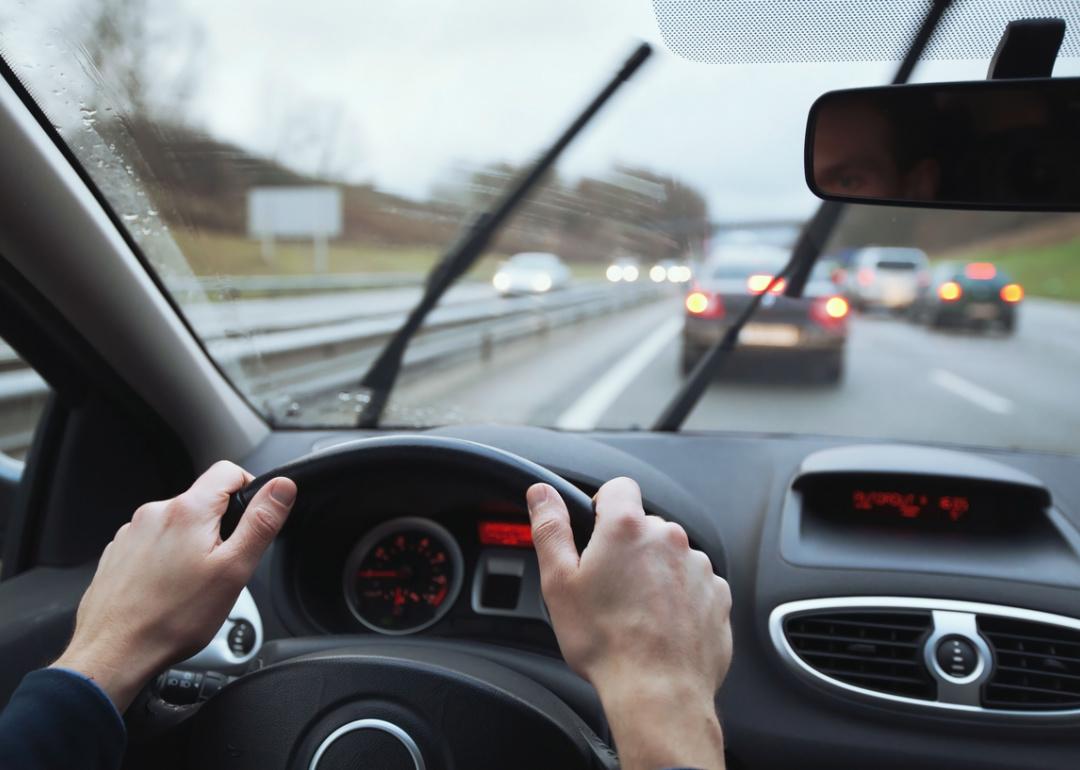
10. Having Windshield Wipers but No Windshield in Texas
Texas law has a strange and ironic requirement: a vehicle must be equipped with working windshield wipers to be legally registered. However, there is no corresponding law that requires the vehicle to have a windshield at all. This peculiar legal loophole means a vehicle could be in compliance with the law despite lacking a major safety feature, though driving without a windshield would still be incredibly unsafe and likely subject to other citations.
Frequently Asked Questions About Strange Traffic Laws
Are there really unusual traffic laws that people unknowingly break?
Yes. Many states have obscure or outdated traffic laws still on the books. These can include prohibitions on driving with certain animals in the car, requiring headlights at unusual times, or rules about when you can honk. While enforcement varies, knowing these laws can help you avoid unexpected fines.
Do weird traffic laws affect my insurance?
Typically, bizarre or obscure traffic laws don’t directly affect your insurance unless breaking them results in a ticket or an at-fault accident. Any traffic violation that shows up on your driving record can influence your premiums, so it’s best to follow both common and strange rules wherever applicable.
Should I worry about strange traffic laws when I travel?
It’s a good idea to be aware of unusual rules when driving in a new state. While most strange laws aren’t heavily enforced, some can result in fines if you’re pulled over. Checking state DMV resources or travel guides before a long trip can help you stay informed and avoid surprises.
